

U.S. households reported to own a pet
Veterinary
Finance the equipment behind modern veterinary care.
Help veterinary practices finance diagnostic, imaging, surgical, and dental equipment. We work with vendors and buyers to account for the equipment package, installation, and funding requirements.
01
Market pulse
Demand is expanding, but practice economics still require discipline.
Research current through August 22, 2026
Reported U.S. pet spending
Veterinary care and product sales
Projected veterinarian job growth to 2034
The American Pet Products Association reports 95 million U.S. households own a pet based on its 2025 National Pet Owners Survey. Its current industry statistics show $158 billion in U.S. pet spending, including $41 billion for veterinary care and product sales, and project $42.4 billion for that category in 2026.
The U.S. Bureau of Labor Statistics counted 86,400 veterinarian jobs in 2024 and projects 10% employment growth from 2024 to 2034, compared with 3% for all occupations. BLS points to pet spending, expanding treatment options, and a growing, aging pet population as demand drivers.
The American Veterinary Medical Association's 2025 economic report adds useful balance: the number and size of veterinary practices continued to grow, but several practice types reported lower gross revenue and productivity measures in 2024 than in 2023.

Veterinary care within U.S. pet spending
$41BVeterinary care and product sales
$158BTotal U.S. pet spending
95MU.S. pet-owning households
Veterinary care and product sales, U.S.
$41BCurrent
$42.4B2026 projected
What the data means for equipment decisions
The category matters. The specific operating decision matters more.
Veterinary buyers vary widely. A general companion-animal clinic, emergency hospital, specialty center, equine practice, mixed-animal practice, shelter, and multi-site group may use similar equipment in very different workflows.
A seller should understand whether the investment replaces an essential system, adds a service, expands capacity, equips a new location, or standardizes a group. A replacement analyzer that protects continuity is not the same business decision as a first CT system, a new dental suite, or a startup hospital package.
Staffing matters as much as the device. A practice may need veterinarians, technicians, specialists, anesthesia protocols, shielding, controlled areas, service coverage, or referral volume before it can use a system as planned. Financing should be coordinated with those requirements, not used to make them disappear from the conversation.

03
Complete scope
The complete equipment investment
Include installation, software, training, and service in the purchase discussion so costs are clear from the start.
- 01
Digital radiography, ultrasound, CT, MRI, endoscopy, and related imaging systems
- 02
In-house laboratory analyzers, microscopes, pathology, and sample-processing equipment
- 03
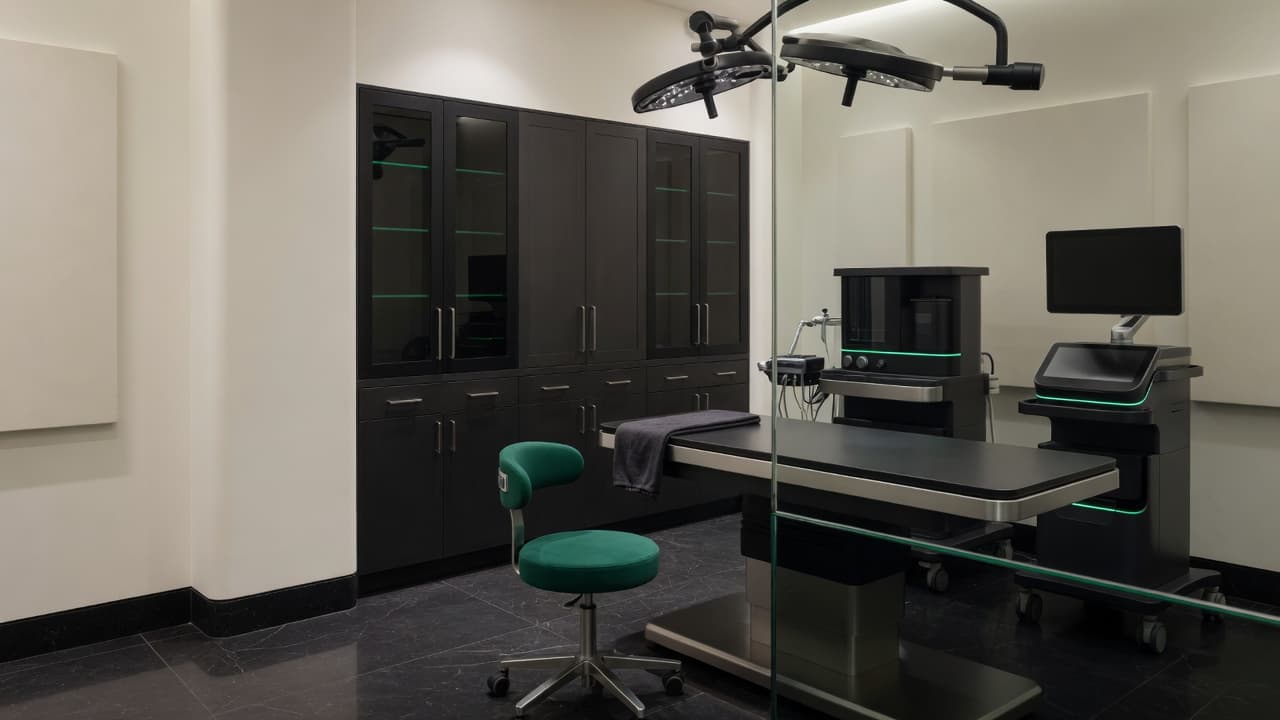
Surgical tables, lights, anesthesia, ventilation, electrosurgery, scopes, and instruments
- 04
Veterinary dental imaging, delivery units, scaling, extraction, and specialty equipment
- 05
Monitoring, ICU, oxygen, infusion, recovery, sterilization, and treatment technology
- 06
Equine, large-animal, emergency, specialty, rehabilitation, and mobile-practice systems
- 07
Practice software, image storage, workstations, integration, and network requirements
- 08
Delivery, rigging, shielding, room preparation, installation, training, warranty, and service
The complete quote should separate the equipment package from facility work, recurring consumables, software subscriptions, staffing, licensing, and other costs. Eligibility remains subject to the applicable financing review.
Where financing fits
Support the equipment decision without predicting the caseload.
Financing may give a veterinary buyer a way to align an approved payment obligation with the timing of an equipment purchase. It does not guarantee appointment volume, referral growth, procedure mix, pricing, clinical results, or financial performance.
The most useful finance conversation identifies the purchase context early:
01

Continuity
Replacing equipment that is unreliable, unsupported, or no longer adequate.
02

Capacity
Adding equipment to support current demand or reduce bottlenecks.
03

Capability
Introducing a new diagnostic, surgical, dental, or treatment service.
04

Location
Equipping an expansion, relocation, or new hospital.
05

Standardization
Bringing multiple sites onto a common equipment and service platform.
05
Vendor discovery
What the vendor sales team should clarify
Better questions create a cleaner handoff without turning a representative into a credit expert.
- 01
What care setting, species mix, ownership model, and location will use the equipment?
- 02
Is the purchase replacement, capacity expansion, a new service, a new site, or group standardization?
- 03
Which hardware, accessories, software, consumables, training, warranty, and service are included?
- 04
Does the system require shielding, power, oxygen, ventilation, plumbing, network, or construction work?
- 05
Who will operate it, and what training, credentialing, specialist, or technician support is needed?
- 06
What is the delivery, installation, validation, training, and acceptance sequence?
- 07
What happens if construction, hiring, referral development, or opening timing changes?
- 08
Which caseload, utilization, pricing, or revenue figures are assumptions rather than guaranteed results?
A responsible LeasePoint workflow
Help the practice move from equipment quote to application.
See how sellers, buyers, and LeasePoint work together from introduction through final requirements.
01
Define the practice and equipment context
Capture the buyer, practice type, locations, purchase purpose, full quote, target timing, and implementation dependencies.
02

Route the buyer securely
LeasePoint gives the buyer the appropriate application path and handles finance questions that should not sit with the equipment representative.
03
Coordinate the transaction and implementation boundary
Provide the vendor with permitted milestones and action requests while keeping sensitive finance information, clinical readiness, equipment performance, and service obligations in their proper roles.
07
Frequently asked questions
Questions that deserve a direct answer.
Focused guidance for sellers and buyers evaluating a complete equipment purchase.
What veterinary equipment may be considered?+
Programs may be designed for imaging, laboratory, surgical, dental, anesthesia, monitoring, treatment, rehabilitation, software, and supporting hospital equipment. Eligibility depends on the equipment, seller, buyer, structure, documentation, and full transaction review.
Can a practice combine several systems in one request?+
The seller should present the full package and identify each system, accessory, service, and implementation item. Whether items can be included together is determined through the applicable financing review.
How should a new clinic or hospital be handled?+
Identify it early as a startup, new location, relocation, or expansion. Ownership, lease, construction, staffing, opening timing, equipment dependencies, and operating evidence may affect the information and review required.
Does financing validate referral or procedure forecasts?+
No. Financing addresses how an eligible equipment purchase may be paid for. Caseload, referrals, utilization, pricing, clinical outcomes, and revenue remain separate business and clinical matters.
What if the site or equipment configuration changes?+
Send the revised quote and timing through the approved workflow. Changes in equipment, amount, location, ownership, seller, services, or implementation may require new review and documents.
Source register
Evidence behind the market context.
Research current through August 22, 2026. Statistics provide market context, not a forecast for an individual company, practice, project, or financing decision.