

U.S. adults estimated to have arthritis
Orthopedic
Finance technology across the orthopedic care pathway.
Support purchases of orthopedic assessment, surgical, and rehabilitation equipment. We help vendors and buyers organize the quote, purchasing entity, installation plan, and financing request.
01
Market pulse
Musculoskeletal need is broad, while orthopedic technology continues to evolve.
Research current through August 22, 2026
Arthritis prevalence among adults 75 and older
U.S. residents age 65 and older in 2024
Hip and knee procedures analyzed through 2024
The CDC estimates that about 53 million U.S. adults have arthritis. National Health Interview Survey data for 2022 found an age-adjusted prevalence of 18.9%, rising to 53.9% for adults age 75 and older.
The U.S. population age 65 and older reached 61.2 million in 2024, growing 3.1% from the prior year. Population aging does not translate directly into a device forecast, but it is an important context for joint, mobility, rehabilitation, and surgical-care needs.
The American Academy of Orthopaedic Surgeons' 2025 American Joint Replacement Registry report analyzed more than 4.4 million hip and knee procedures with complete information from 2012 through 2024. The registry's current page reports data on more than 5 million procedures across hospitals, ambulatory surgery centers, and private-practice groups.

Arthritis prevalence by age, 2022
18.9%All adults
53.9%Age 75+
American Joint Replacement Registry scale
5M+Total registry procedures
4.4MAnalyzed with complete data, 2012–2024
What the data means for equipment decisions
The category matters. The specific operating decision matters more.
Orthopedic technology sits across multiple sites and owners. The buyer may be a physician practice, ambulatory surgery center, hospital, rehabilitation group, sports-performance business, management organization, or integrated network.
The same equipment may serve diagnosis, surgical planning, procedure execution, post-operative rehabilitation, injury recovery, or performance assessment. The seller should identify the intended use, responsible operator, purchasing entity, care location, credentialing needs, and implementation owner.
Financing can support a well-defined equipment transaction, but it cannot settle clinical appropriateness, patient selection, procedure volume, reimbursement, outcomes, or facility readiness. Those responsibilities should remain clear throughout the sales and implementation process.

03
Complete scope
The complete equipment investment
Include installation, software, training, and service in the purchase discussion so costs are clear from the start.
- 01
Assessment, motion analysis, force, gait, balance, strength, and functional testing systems
- 02
Surgical tables, lights, navigation, robotics, visualization, and procedural equipment
- 03
Ultrasound, imaging, diagnostic, planning, and patient-monitoring technologies
- 04
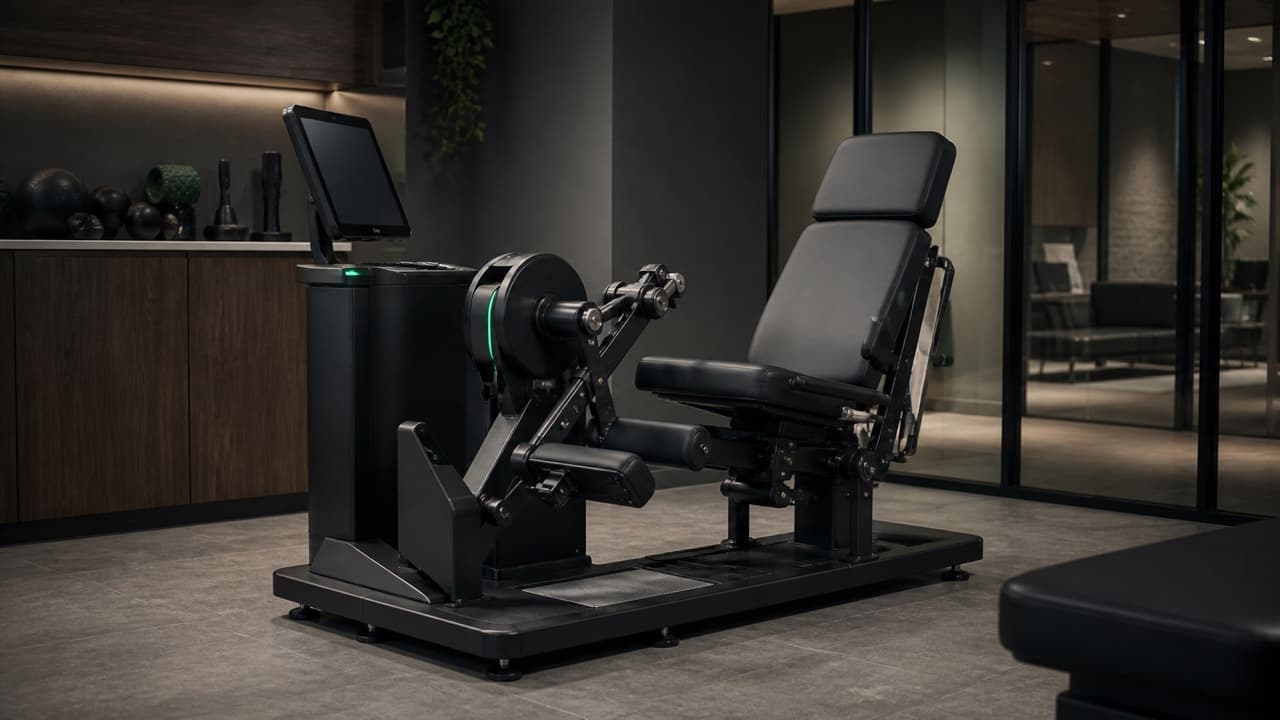
Rehabilitation, isokinetic, neuromuscular, mobility, strength, and recovery systems
- 05
Bracing, fitting, fabrication, sterilization, storage, and supporting clinical equipment
- 06
Software, planning, analytics, reporting, workstations, and system integrations
- 07
Delivery, site preparation, power, network, rigging, installation, validation, and training
- 08
Warranty, maintenance, service, accessories, disposables, and costs outside the quote
The quote should make the full package and third-party dependencies visible. Actual eligibility remains subject to the applicable financing review.
Where financing fits
Plan for equipment, installation, and facility requirements.
Financing may help a buyer compare paying the full equipment cost upfront with an approved obligation paid over time. It does not prove that the equipment will increase procedure volume, improve reimbursement, create referrals, reduce costs, or generate a return.
The financing context should be explicit:
01

Replacement
Updating or retiring existing equipment.
02

Capacity
Adding technology within an operating practice or facility.
03

New capability
Introducing a procedure, diagnostic, assessment, or rehabilitation service.
04

New site
Equipping a location with construction, credentialing, staffing, and opening dependencies.
05

Network rollout
Standardizing technology, service, data, and training across facilities.
05
Vendor discovery
What the vendor sales team should clarify
Better questions create a cleaner handoff without turning a representative into a credit expert.
- 01
Which legal entity is purchasing, and where will the equipment operate?
- 02
Is the setting a practice, hospital, surgery center, rehabilitation facility, performance center, or network?
- 03
Is the purchase replacement, capacity, a new capability, a new site, or standardization?
- 04
Which equipment, software, accessories, disposables, training, warranty, and service are included?
- 05
What site, power, network, sterile-processing, construction, or safety requirements apply?
- 06
Who owns credentialing, clinical readiness, installation, training, validation, and acceptance?
- 07
Which related contracts, third-party systems, or facility approvals must be complete?
- 08
Which procedure-volume, reimbursement, capacity, clinical, or revenue figures are assumptions rather than guaranteed outcomes?
A responsible LeasePoint workflow
Coordinate the purchase with the clinical and finance teams.
See how sellers, buyers, and LeasePoint work together from introduction through final requirements.
01
Define the technology and operating entity
Capture the buyer, site, intended use, equipment package, target timing, responsible operators, and implementation dependencies.
02

Move finance questions to the right specialist
LeasePoint provides the appropriate application and owns credit, possible structures, documentation, and transaction questions.
03
Coordinate permitted milestones
Share relevant actions and status while clinical readiness, facility approvals, equipment performance, sensitive applicant information, and final finance decisions remain with authorized parties.
07
Frequently asked questions
Questions that deserve a direct answer.
Focused guidance for sellers and buyers evaluating a complete equipment purchase.
What orthopedic equipment may be considered?+
Programs may be designed around assessment, imaging, procedural, surgical, rehabilitation, recovery, software, and supporting technology. Eligibility depends on the equipment, seller, buyer, intended use, project, structure, documentation, and review.
Can equipment for an ambulatory surgery center be financed?+
The equipment can enter the applicable review, but the purchasing entity, facility, ownership, location, approvals, credentialing, installation, and acceptance context should be identified early. Financing does not establish facility or clinical readiness.
Does financing validate procedure volume or reimbursement?+
No. Financing addresses how an eligible purchase may be paid for. Procedure volume, payer coverage, reimbursement, patient outcomes, capacity, and return remain separate determinations.
Can software, training, and service be included?+
They should appear clearly when part of the complete package. Whether a cost can be included is determined during review. Recurring software, service, and disposable obligations may require separate treatment.
What happens when site or equipment scope changes?+
Return the revised scope through the approved workflow. Changes to the system, amount, location, ownership, vendor, services, delivery, or acceptance plan may require additional review and updated documents.
Source register
Evidence behind the market context.
Research current through August 22, 2026. Statistics provide market context, not a forecast for an individual company, practice, project, or financing decision.